Case studies
The work is different. The thinking behind it isn’t.
A flying club. A recruiting course. An accounting firm. A watch company. An online cooking course. A personal development business. Six businesses with almost nothing in common.
What connects them is what happened before anything was designed or built — understanding the problem properly, deciding what actually needed to be done, then carrying that thinking through to the finished work.
If you’re trying to judge whether the person you hire will build what you ask for, or help you work out what’s worth asking for, these six projects are my answer.
Pacific Flying Club
The launch was the start of the work, not the end of it.
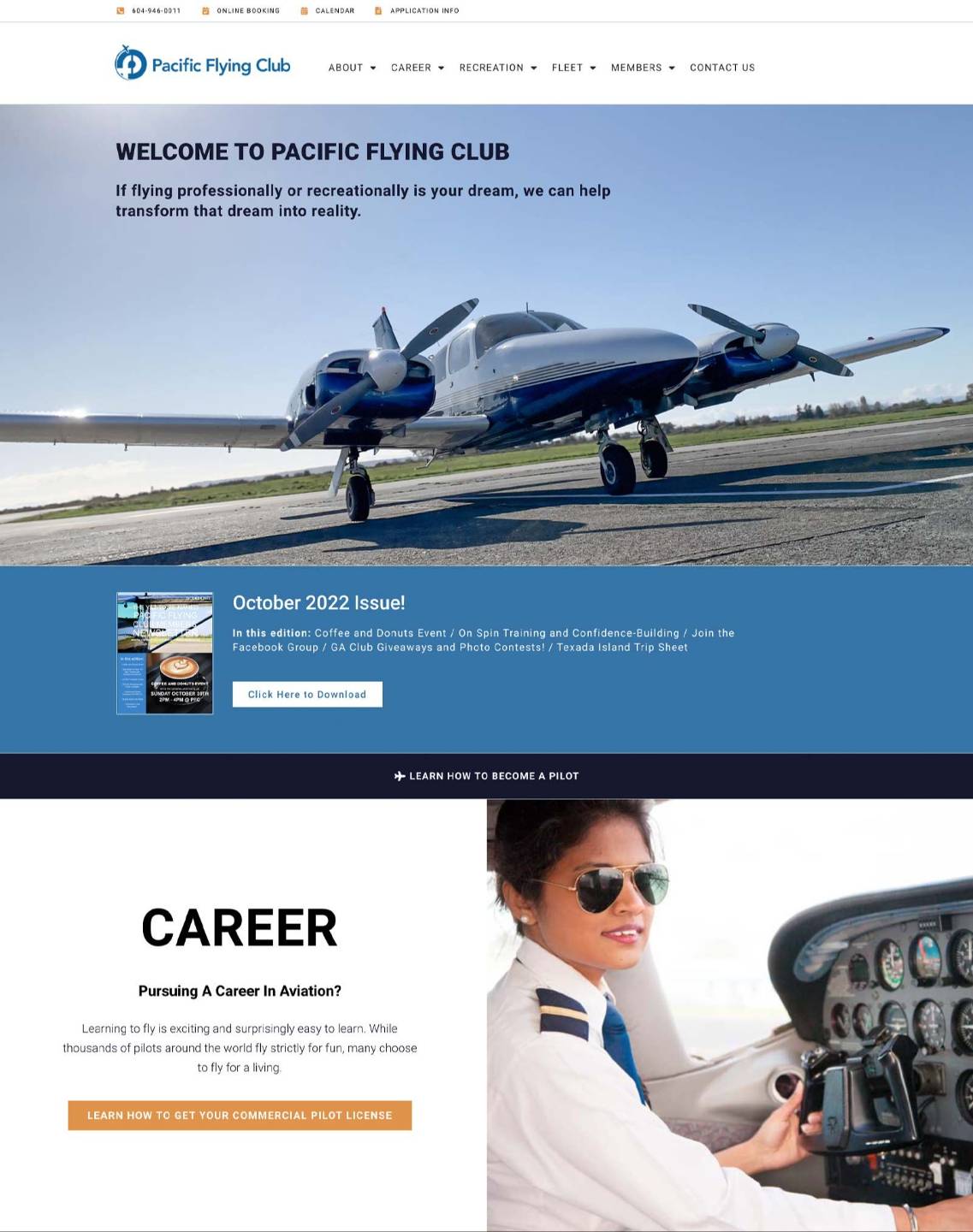
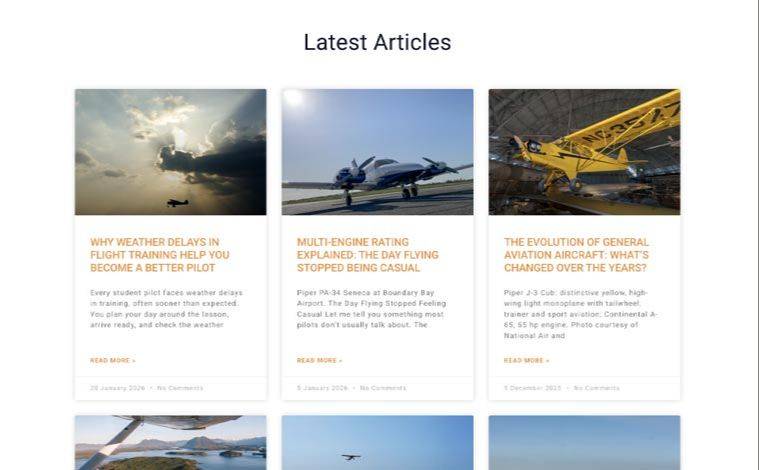
Pacific Flying Club came to me in 2021 with an aging website and a straightforward brief: redesign it. As an established flight training organization, PFC had a great deal of information serving several audiences at once — student pilots, licensed members, prospective renters — and the immediate job was to reorganize it into something current and genuinely useful.
We launched, and then the work changed shape. PFC isn’t a business trying to establish itself; it has longevity, strong recognition and a settled position in organic search. Which means the real risk isn’t failing to grow. It’s damaging something that already works. My ongoing role is to protect that while improving everything around it.
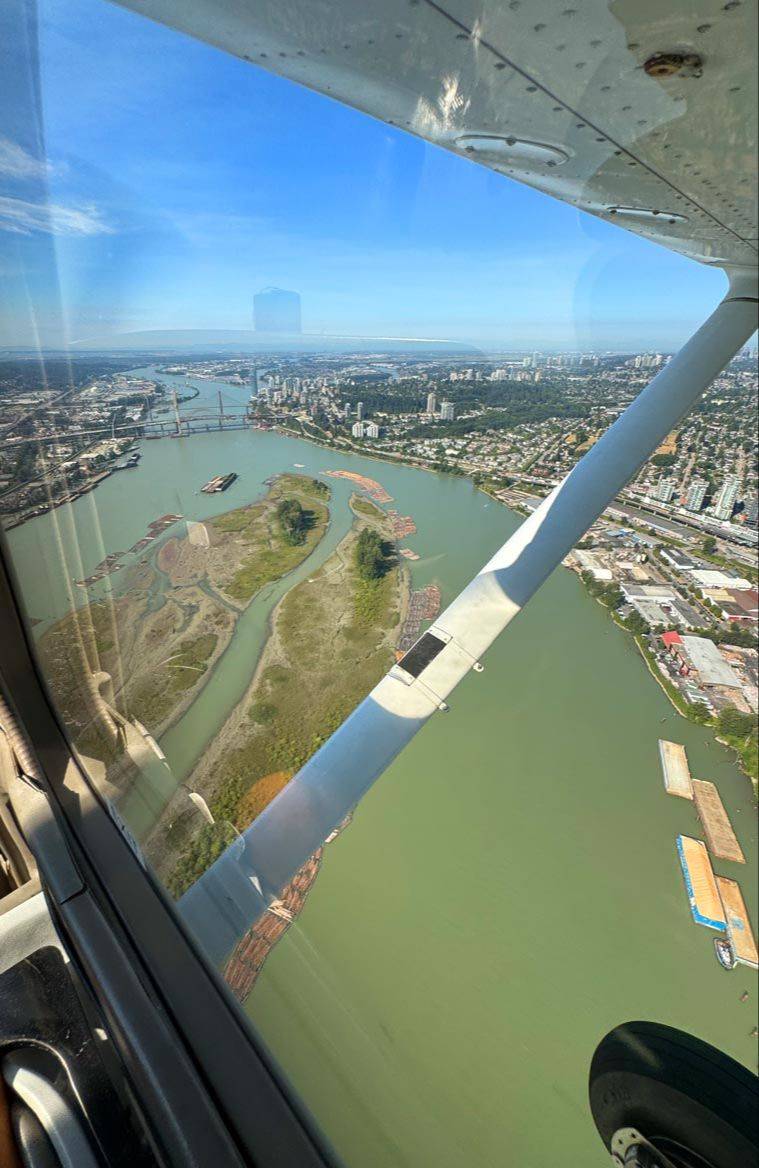
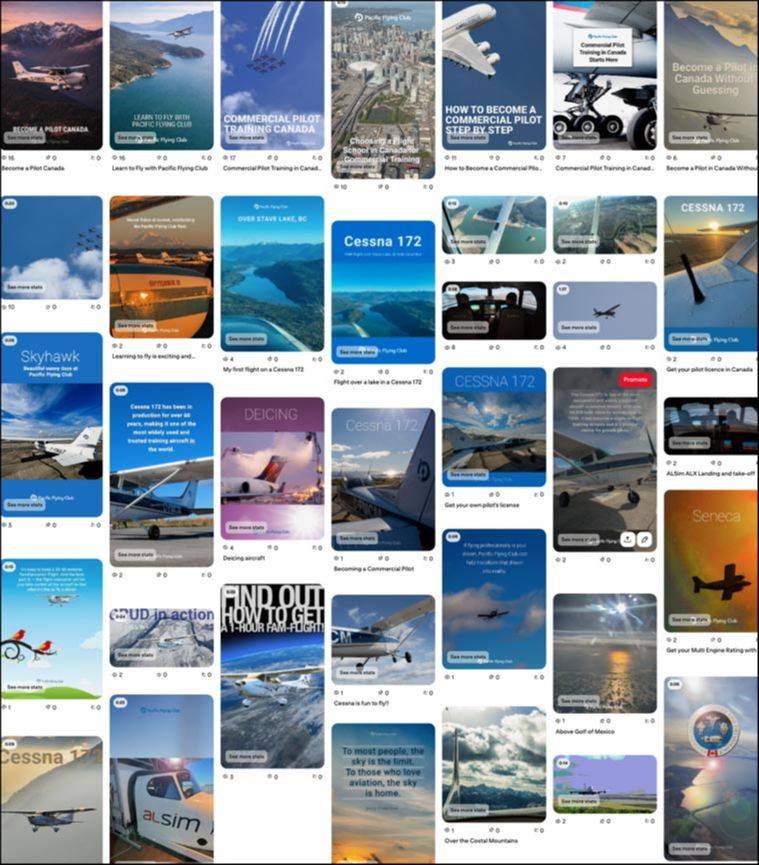
That has grown to include website development and management, content and article development, photography, social media content, email communications, technical support and strategic advice. Much of it comes down to consistency: whether someone meets Pacific Flying Club through the website, an article, an email or a post, it should feel like the same organization.
More than five years after the first project, I’m still working with them. They didn’t just keep the website. They kept the relationship.
The outcome
Five years and counting — a website redesign that became an ongoing role across the club’s entire digital presence.
We partnered with Andre in May 2021. Since then, we have launched our new website and received great feedback from our members. Throughout the process, Andre was easy to communicate with and welcoming to our ideas and requests.
— Avyn Duimel, Pacific Flying Club
The Search Standard
Expertise doesn’t become a product until someone can find their own way into it.
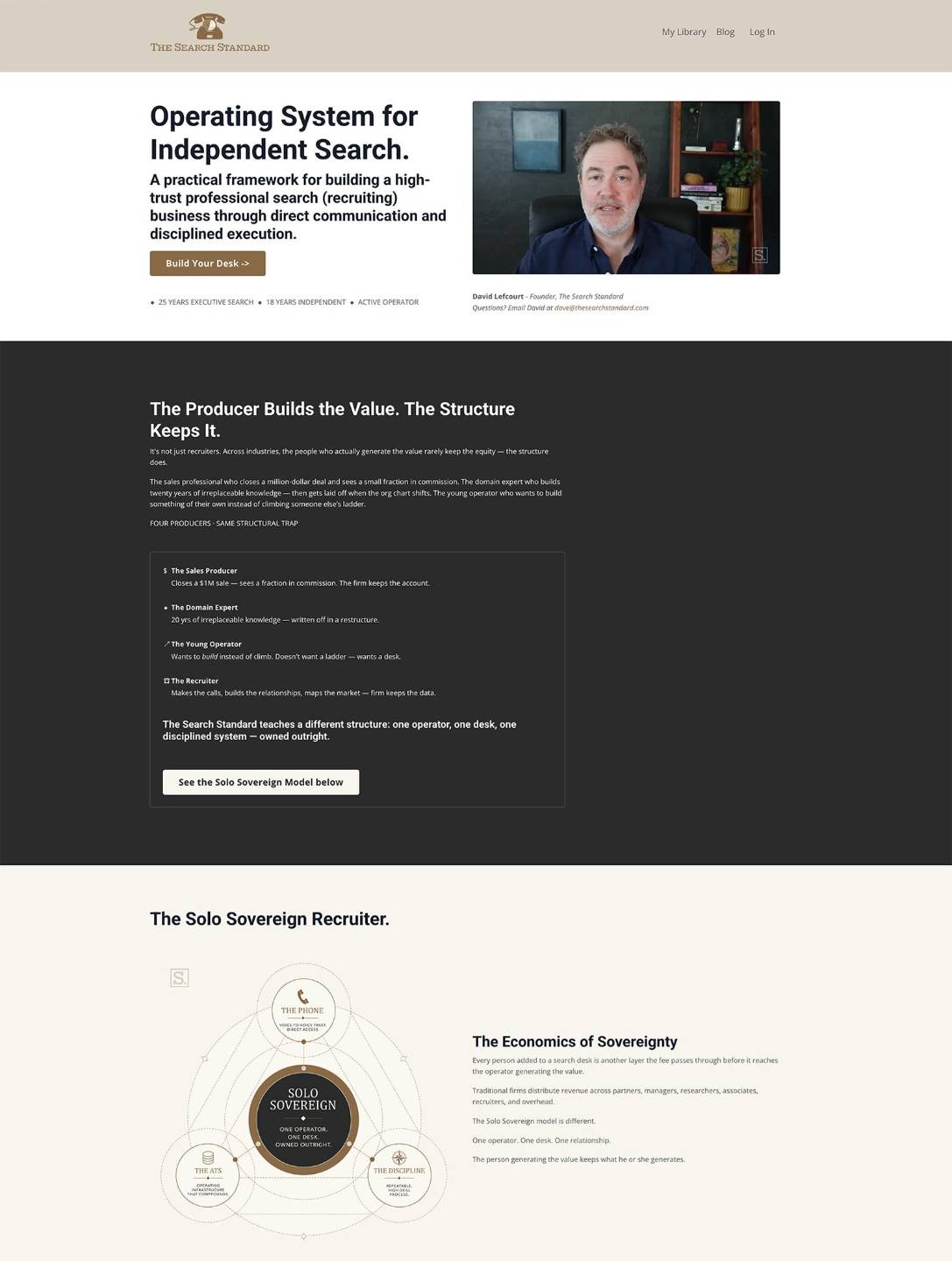
David Lefcourt came to me with deep experience in professional recruiting, a large body of course material, and a decision already made to build on Kajabi. The Search Standard is his operating system for Independent Search — a framework for building a high-trust recruiting business on direct communication and disciplined execution.
He knew the material thoroughly. What wasn’t settled was how to make a buyer understand exactly what they were getting, so I learned the methodology myself before designing anything for it, working through it with David until the structure of the value was clear enough to present.
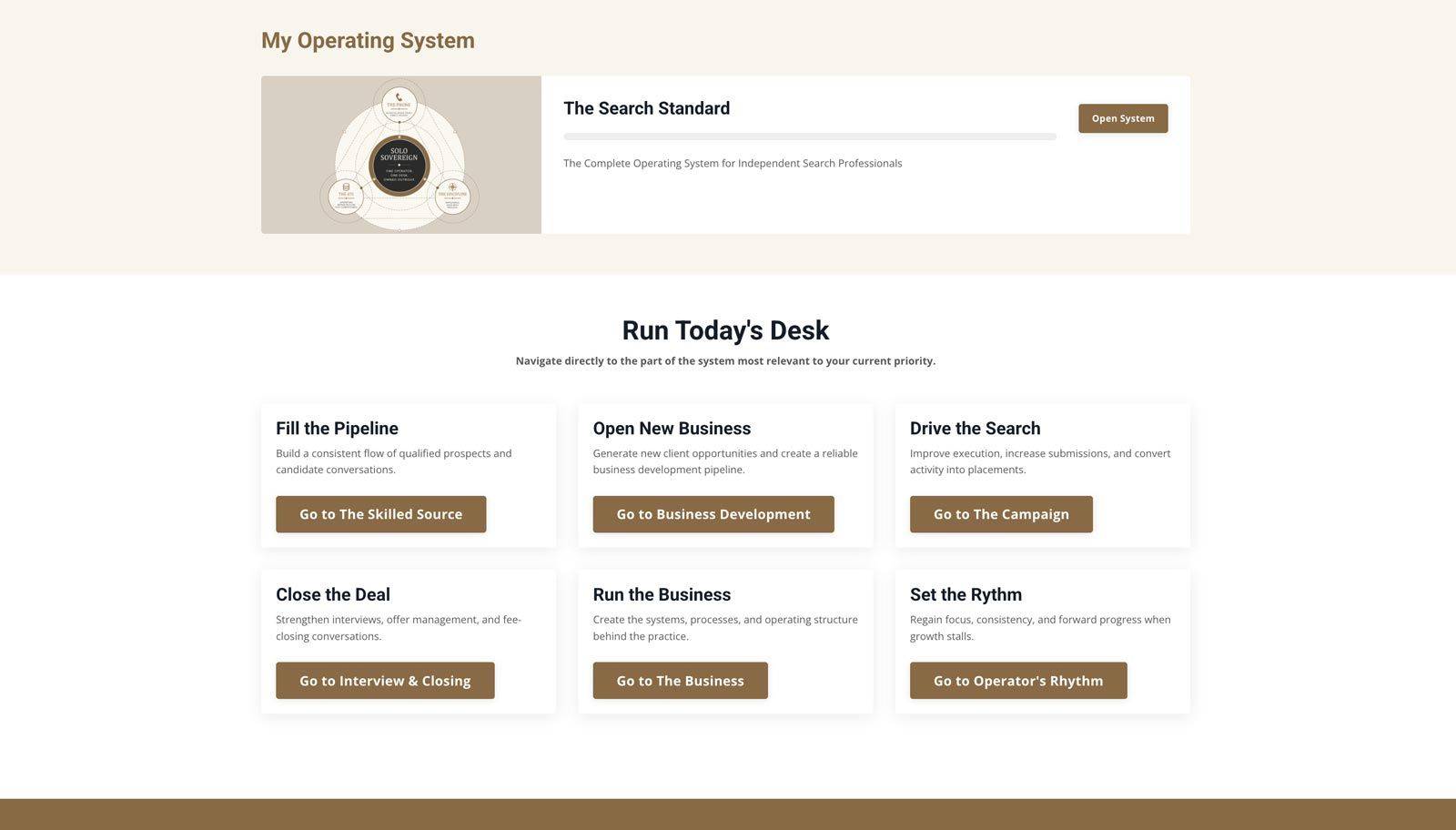
That same work changed the course. David didn’t want every student told to begin at Module 1, Lesson 1, because his material was never meant to be purely linear. We built six entry points instead, each matched to a situation a recruiter might genuinely be in, so students can come in through the door that fits where they’re stuck or take the whole sequence in order if that’s what they need.
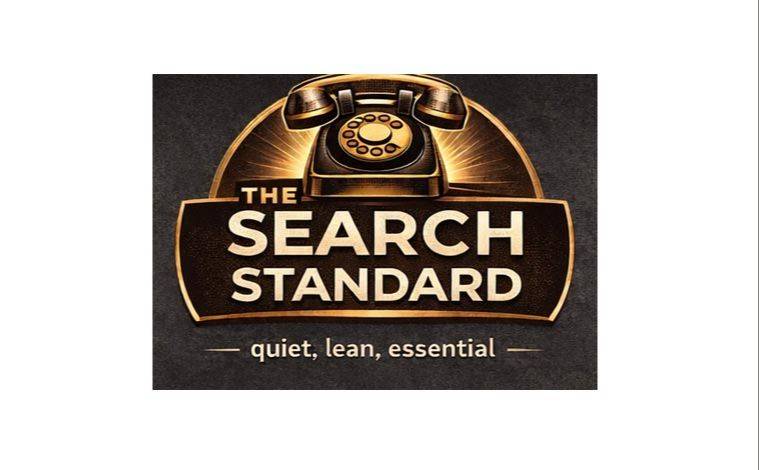
The brand followed the same logic. David wanted to keep the telephone at the centre of his existing logo, because direct communication is the heart of his method. Rather than discard an idea that carried meaning, I simplified it and built a cleaner identity around it.
The outcome
A clear answer to both of the questions that decide whether a course works: what am I buying, and where do I start?
Andre took on The Search Standard project and knocked it out of the park. Choosing Andre for the site and course build was the best decision I could have made.
— David Lefcourt, The Search Standard

Genesa CPA
Before there was a logo, there wasn’t even a name.
The practice had been named after its founder, the way most accounting and law firms are. When I was brought in, the brief wasn’t to modernize that identity. The company wanted a new name, and a brand capable of representing where the business was heading rather than where it had come from.
So we didn’t begin with logos. We began with visioning and strategy sessions about the company itself — what it stood for, how it wanted to be understood, and what a new identity would have to communicate to clients who had known it under the founder’s name for years. That process is where the name Genesa came from.
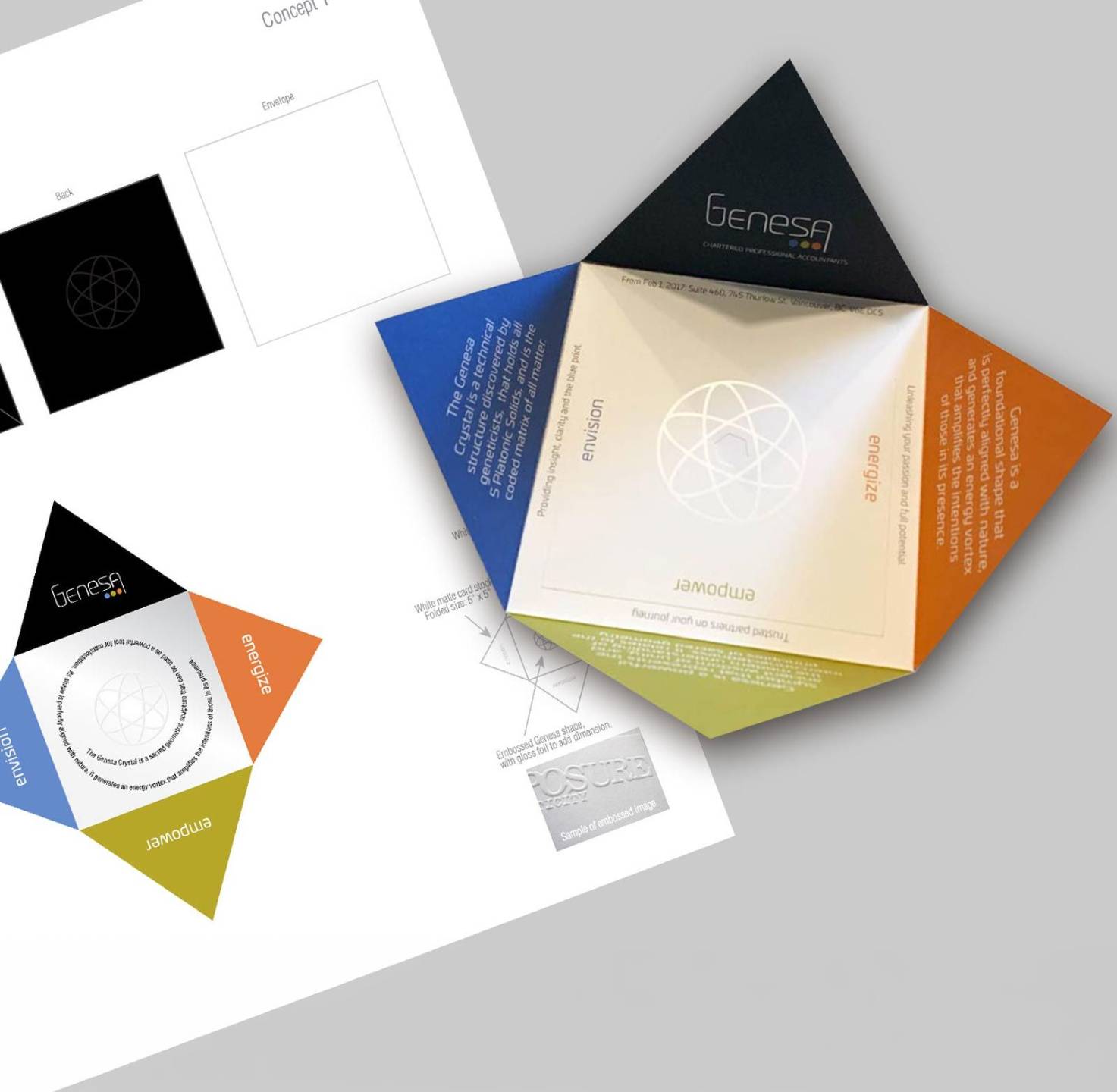
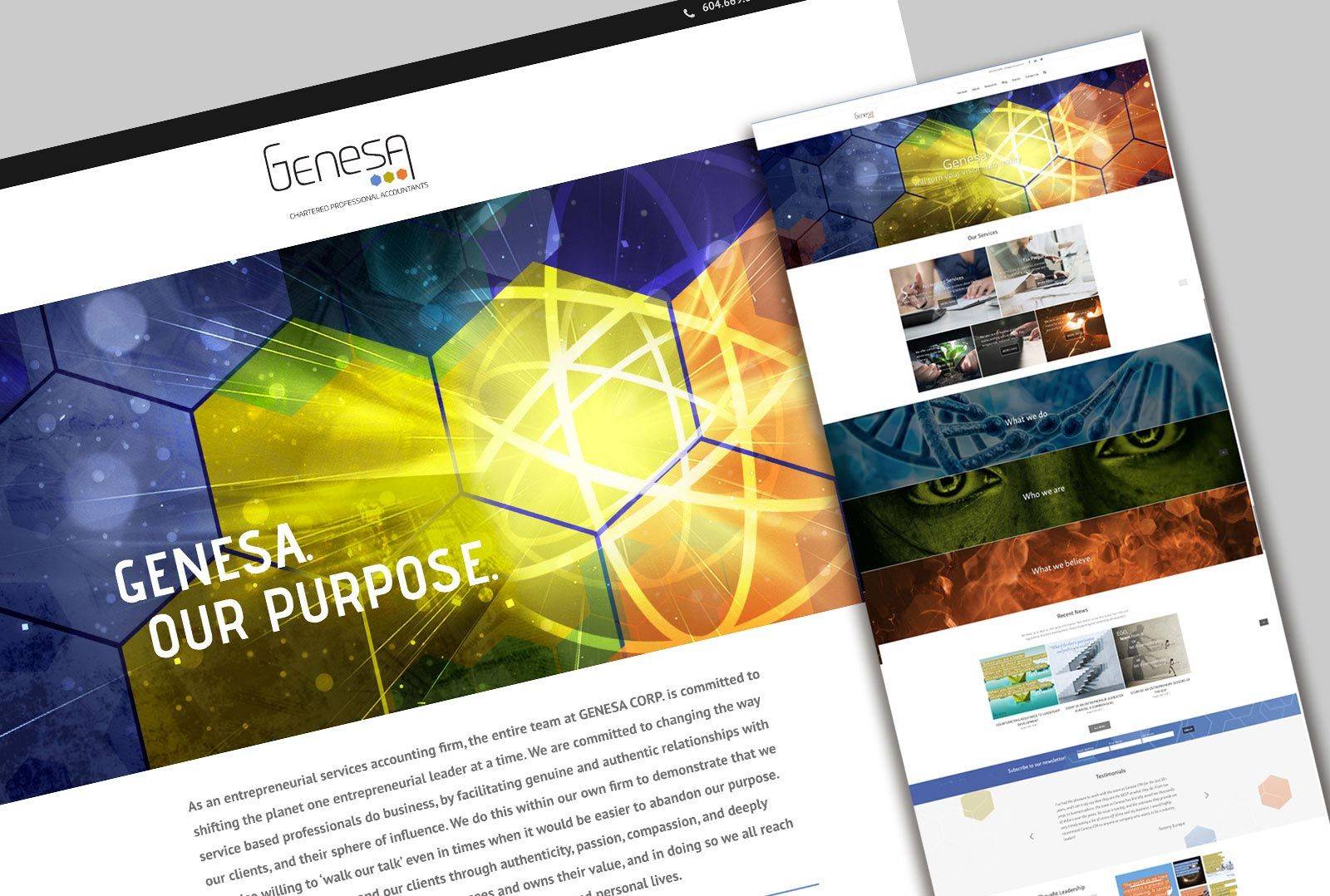
Only then did the visual identity start: logo, colour palette, typography, and the broader look and feel. From there it moved into its first real applications. I designed the direction for the new website, with another developer handling the WordPress build, and designed a printed direct-marketing piece to introduce the new name and the new positioning to the market.
Vision, then name, then identity, then website, then market introduction. The logo wasn’t the strategy. It was what the strategy looked like once the decisions had been made.
The outcome
A complete change of name and identity, taken from first principles through to the piece that announced it.
This wasn’t a logo project. I was involved from the first visioning sessions and the decision to rename the firm, through naming, brand strategy, identity and visual standards, and into the website and the direct-mail piece that introduced Genesa to the market.
Momentum Watches
Sometimes the right recommendation is to replace something I built.
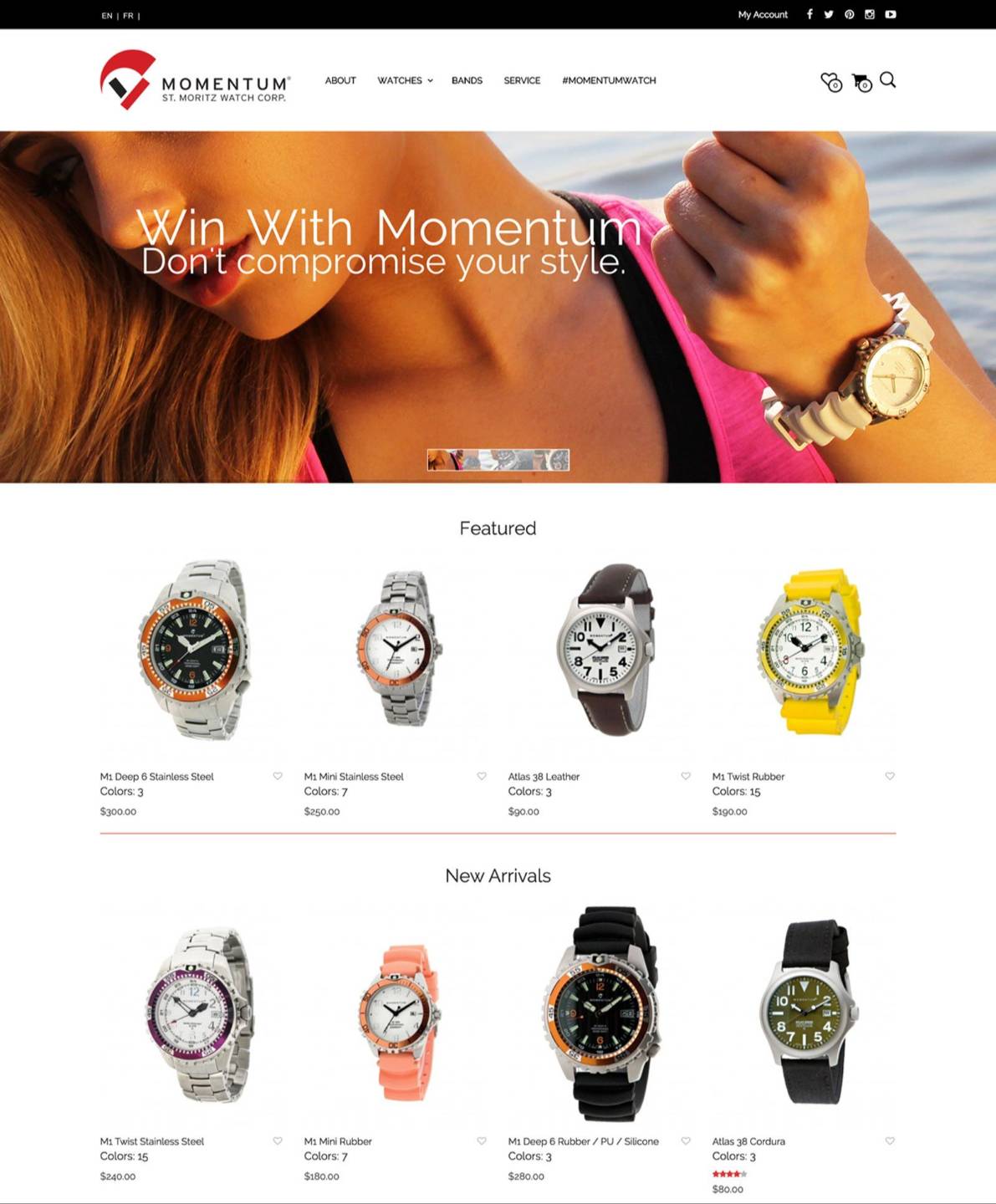
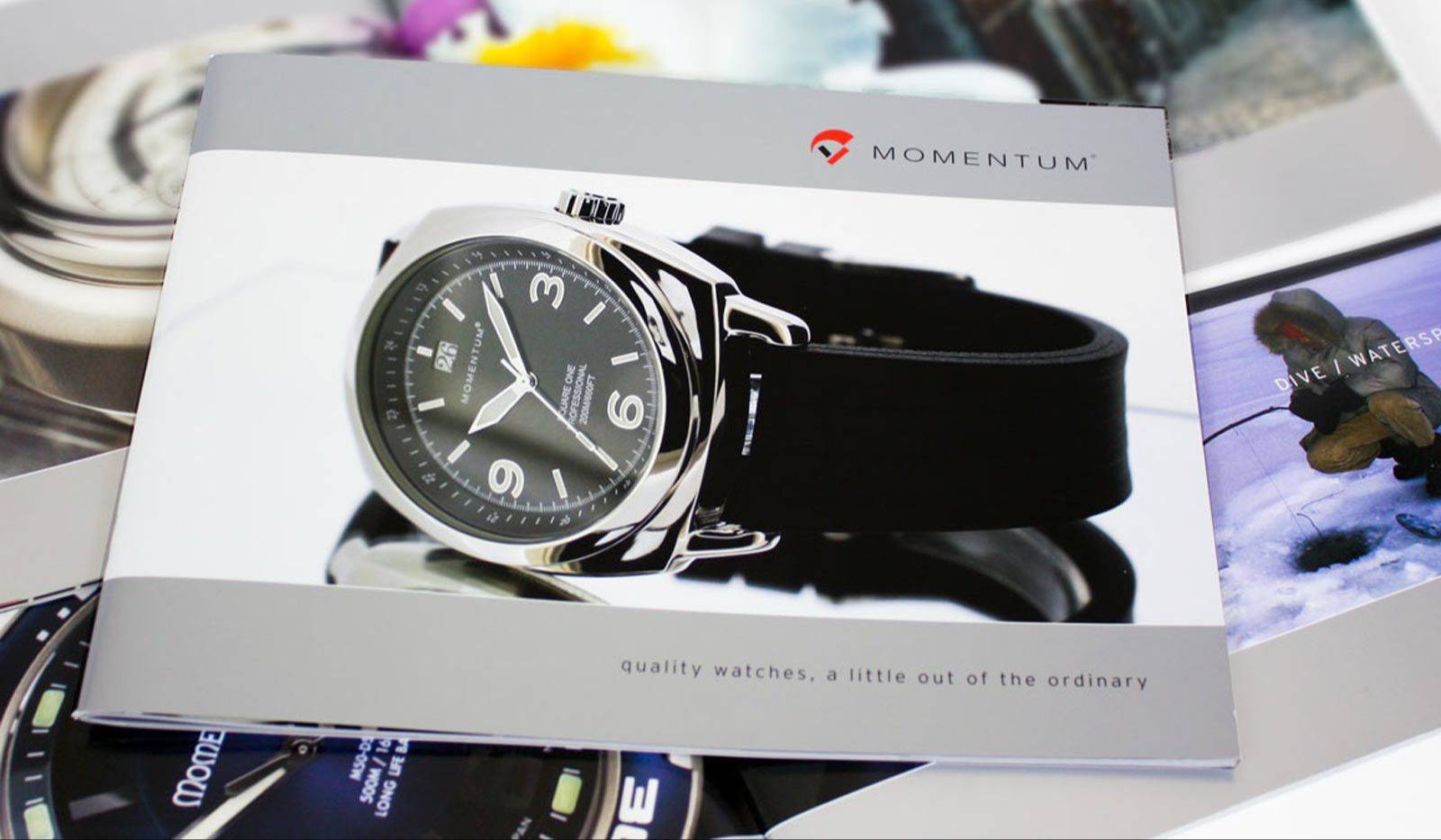
My relationship with St. Moritz Watch Corp., the company behind Momentum Watches, goes back further than any other client on this page — branding, brochures, posters, postcards, websites and a long list of marketing material. The most consequential project began as a conversation about e-commerce.
Momentum’s business had been built largely on wholesale, and the company was rightly concerned that selling directly to customers online could damage those relationships. So the first question wasn’t which platform to use. It was whether entering direct e-commerce was the right business decision at all. After a good deal of discussion the company decided to proceed, and I designed and built its first store on WordPress and WooCommerce.
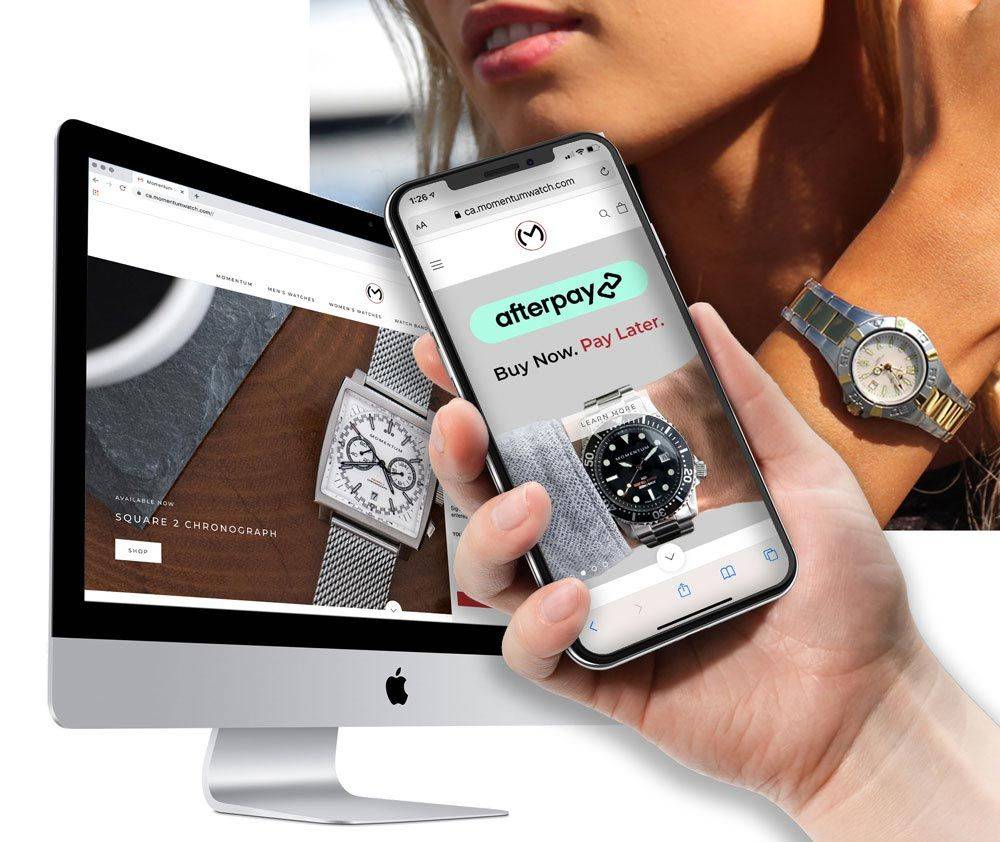
Then the business grew. The store worked, but as volume increased it began running into platform problems and crashes, and about eighteen months in I went back with a recommendation the client hadn’t asked for: move to Shopify. The system I’d built was no longer the system I thought they should keep. Once we agreed on the direction, we redesigned and rebuilt the whole operation around the new platform.
The original decision hadn’t been wrong. The business had changed. I’m not interested in defending yesterday’s choice because I happened to be the one who made it — if a business outgrows what I built, my job is to say so.
The outcome
A markedly more reliable store, far fewer crashes, and online revenue that has grown since the move.
We have worked with Andre Somov for many years. Andre and his team have always provided us with swift responses, prompt and courteous service and first-class work.
— Simon A.N. Pennell, CEO, St. Moritz Watch Corp.
Global Vegetarian
We executed all of it well. The question we hadn’t answered came earlier than any of it.
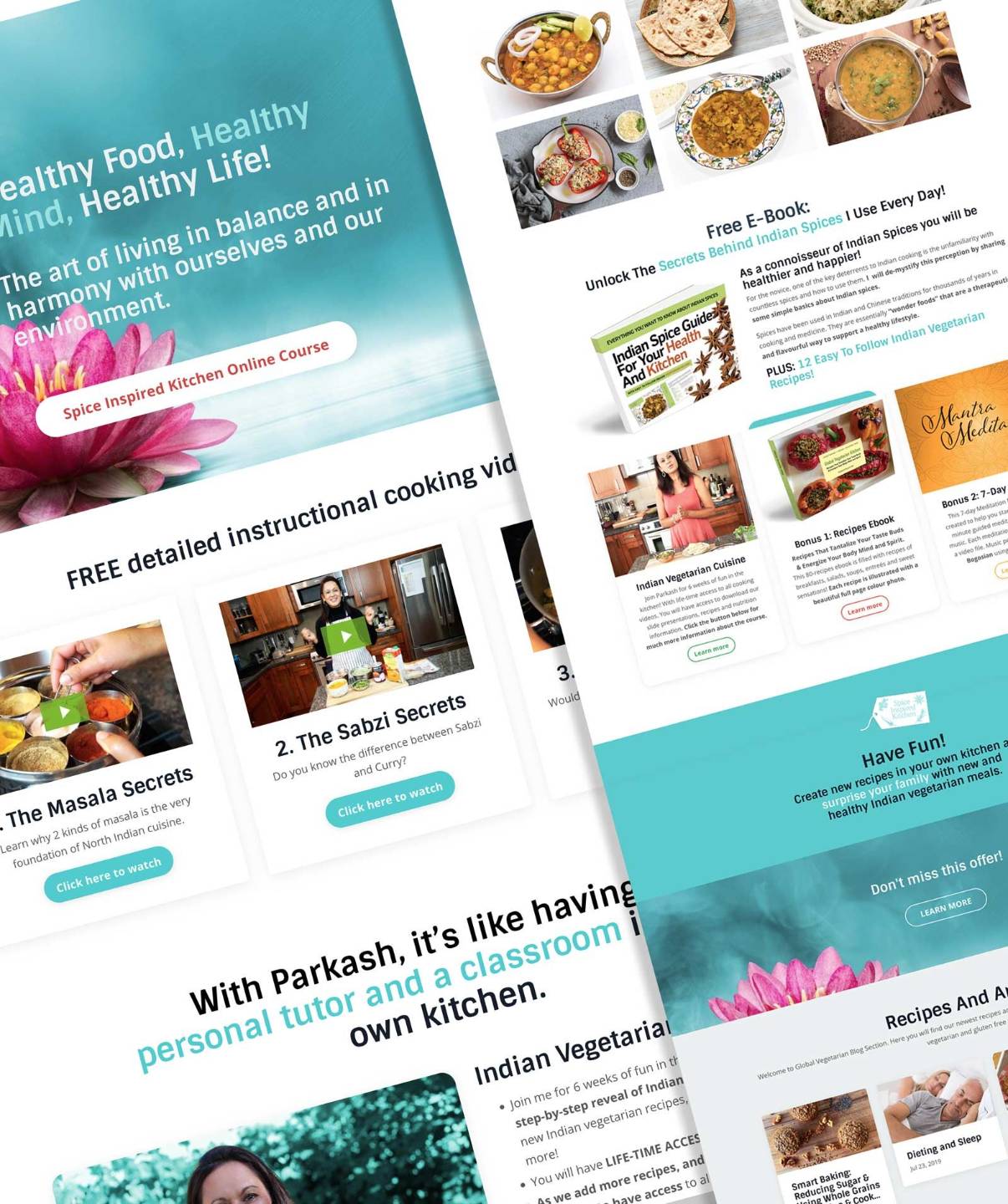
Global Vegetarian is the most complete online business I’ve built. I developed the brand from nothing — logo, colour palette, typography, visual direction — then built the website as a content platform and started growing an audience on Instagram and Facebook.
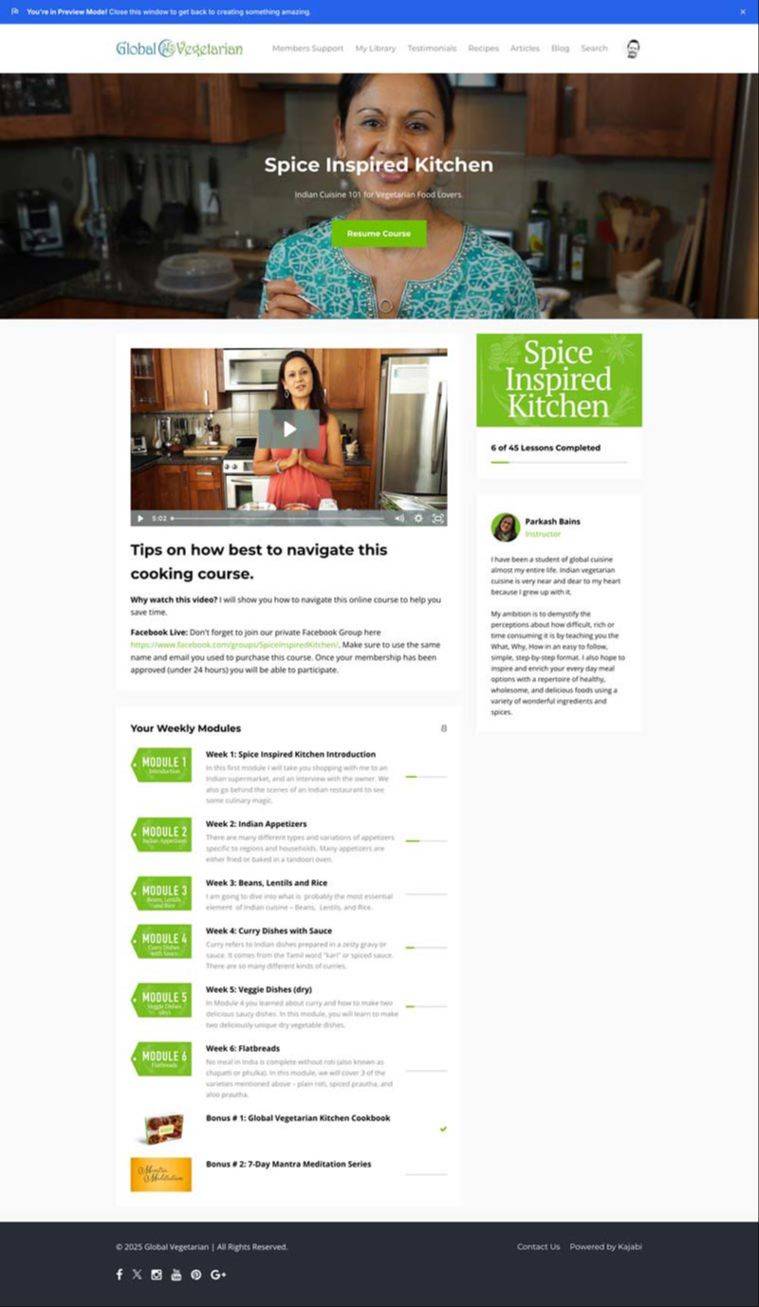
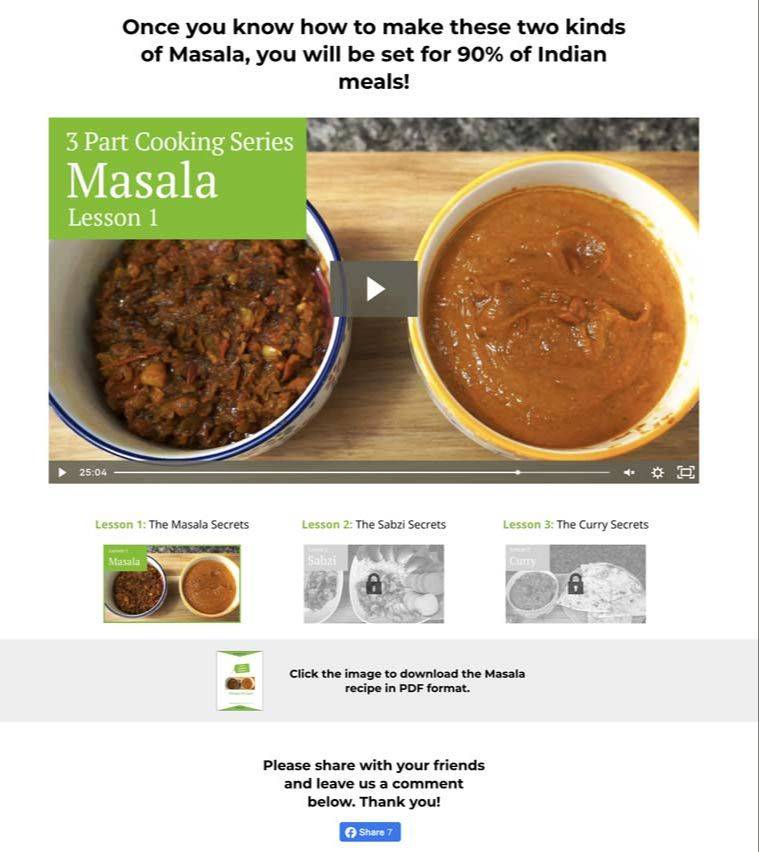
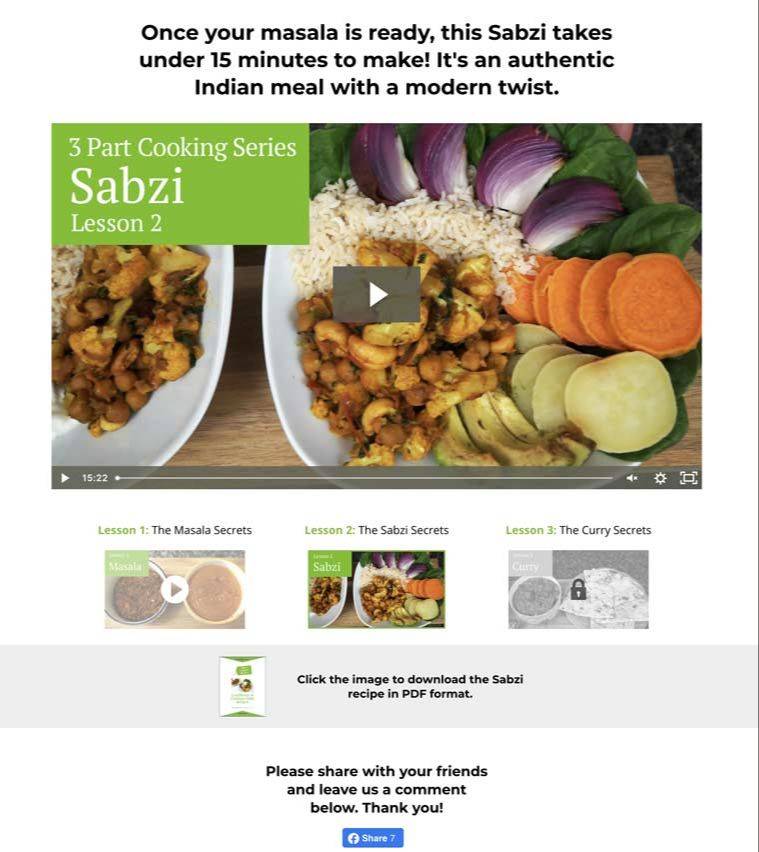
Then came the course, and my part in it covered nearly everything: planning and design, videography and video editing, Kajabi development, course materials, downloads, the whole student experience. Once it was ready we built the marketing around it — a three-video launch funnel where the first two videos developed the subject and the relationship with prospective customers, and the third kept teaching while it moved into the offer, supported by landing pages and email.
From a production standpoint we got a great deal right. But there was a business question none of us had answered well enough before all that work began: was there enough evidence of a market to justify building it? In the end, the revenue didn’t come close to justifying what the course had cost to create and market.
That changed how I work. Before I’ll recommend that anyone spend months building a course, I want evidence that the problem is real, that people are actively trying to solve it, and that there’s a reasonable case for them paying to have it solved. Good execution cannot answer a market question that should have been settled before the execution started.
The outcome
A complete business system, built well, on a foundation nobody had tested — and the reason I now ask for evidence before a course gets built.
Andre made an amazing website for us. He developed all aspects of the website, including the online course, marketing materials, emails and more. He even edited all my videos. I would highly recommend him.
— Parkash Bains, Global Vegetarian

Playful Loving
The brief was right. It just wasn’t the whole job.
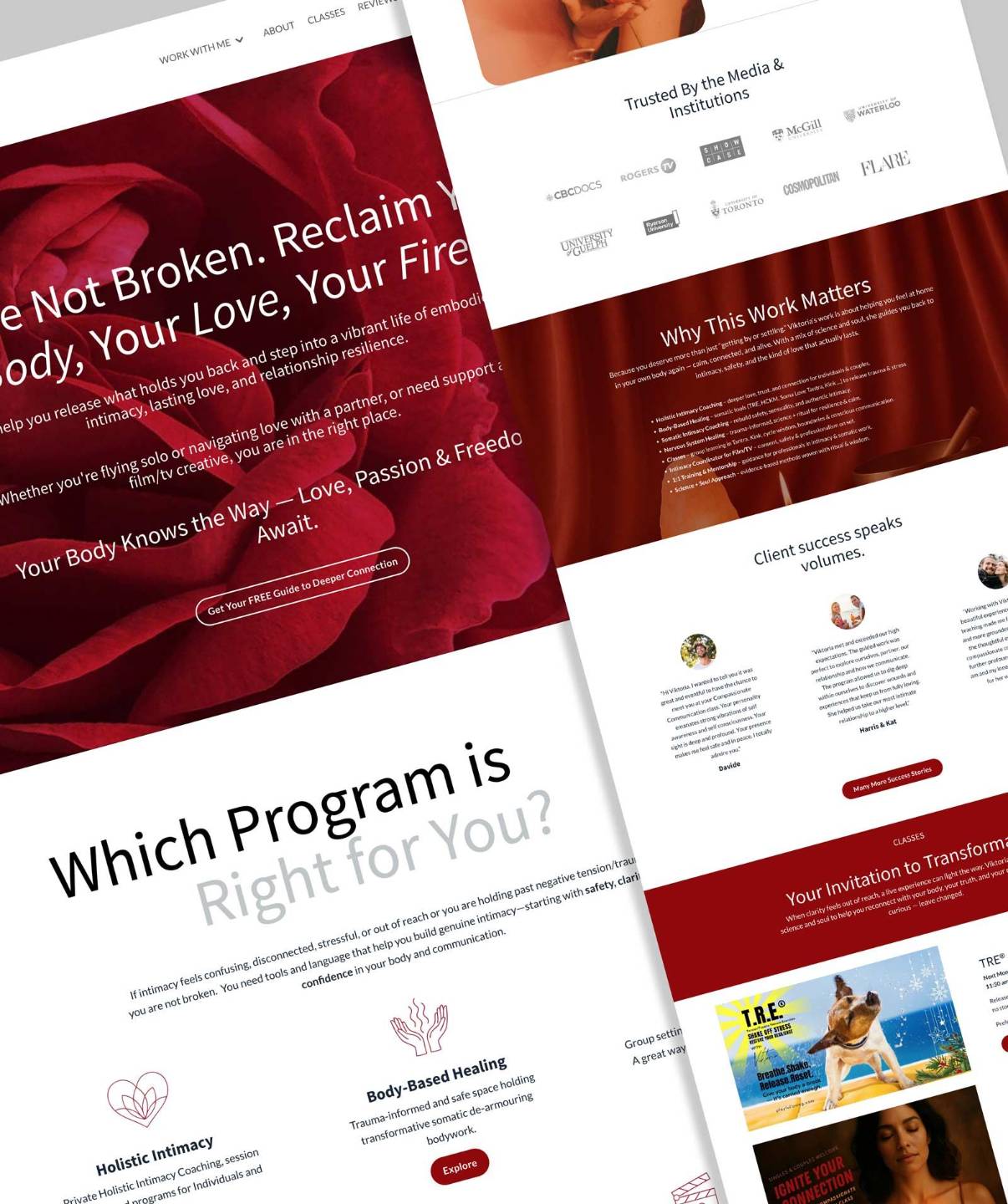
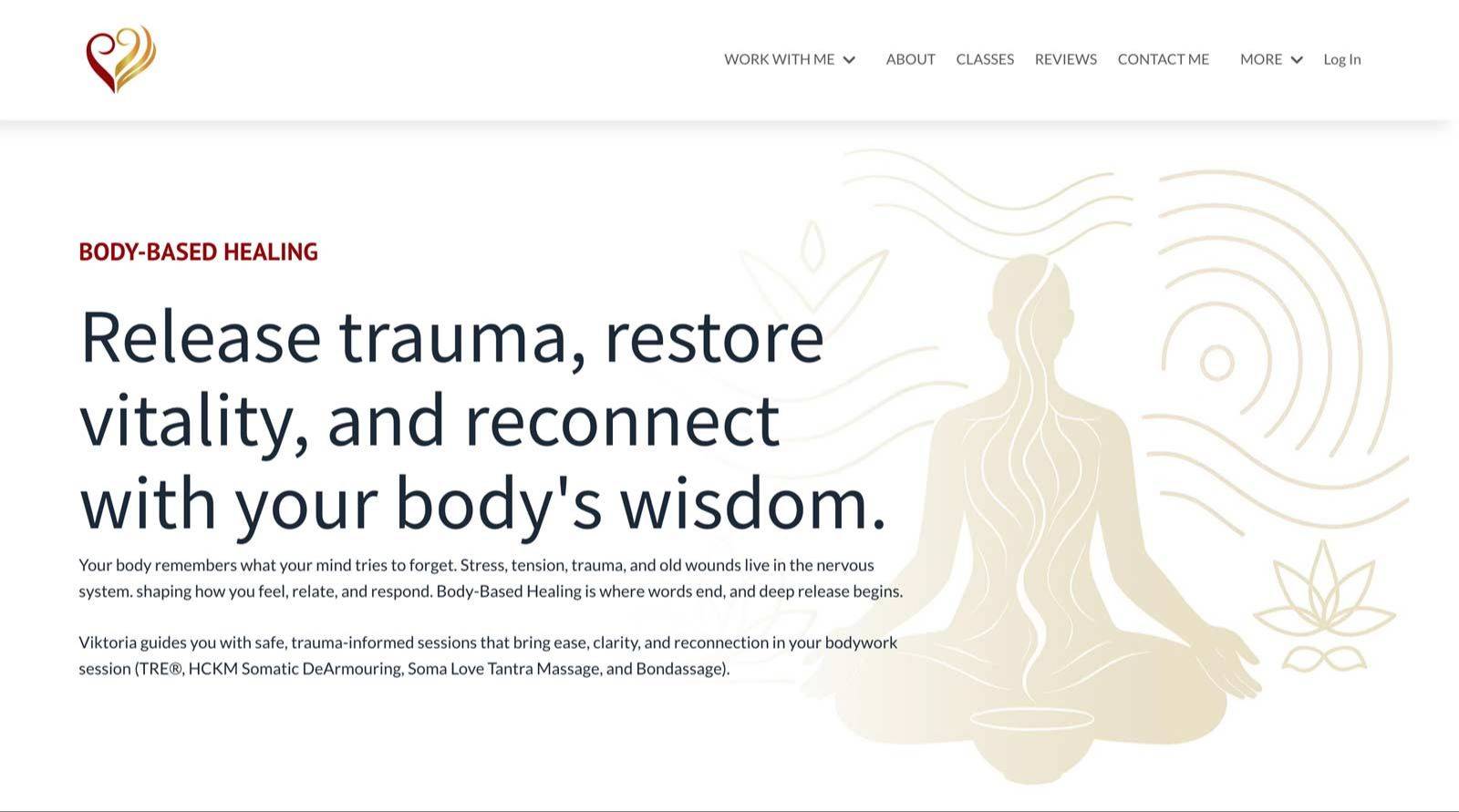
Viktoria Kalenteris came to me wanting a full redesign of her Kajabi website and a lighter, simpler version of her logo. Both were reasonable requests, and both eventually happened. But once I started going through the site I couldn’t make good design decisions yet — there was too much competing information, and I couldn’t tell what a visitor was supposed to understand first.
So we went back through the business before touching any pages: what she was actually selling, which offers mattered most, how the different parts related to one another. We simplified what needed simplifying and established a clear hierarchy for the site. Then I could design.
The logo took the same route. Its gold and grey gradients reproduced badly and had begun to look dated, so rather than abandon an identity she was attached to, I simplified and rebuilt it around the lighter direction she wanted. With the structure and the identity settled, I redesigned the Kajabi pages and developed a visual system for them, including custom illustrations for the hero sections.
Viktoria asked for a redesign and a lighter logo, and she got both. She also got the part that had to come first.
The outcome
A simpler site built on a clear hierarchy of offers, and a logo that reproduces cleanly at any size.
After hitting a roadblock of overwhelm while navigating my new Kajabi website platform, I sent out a call for help. Andre answered with a calm, respectful steadiness and clarity that immediately settled my website chaos and my request for an energetically lighter new logo. He captured all the details of my vision while offering insight I didn’t even know I needed.
— Viktoria Kalenteris, Playful Loving
What they have in common
What these six projects have in common isn’t the work.
A twenty-five-year client relationship. A course structure. A company name. Replacing a platform I had recommended and built myself. A course that didn’t earn back what it cost. A brief that needed more than the redesign it asked for.
Different businesses, different decades, different problems. The same first move every time — understand why, before deciding what’s worth building.
Have a project in mind
Not every project fits neatly into a box.
You may need a website, a course, a brand, or a better way to sell something you’ve already made. Or you may only know that something isn’t working, and not yet know what has to change. Either one is a good place to start.
Schedule a Complimentary Call