Stop Guessing: How to Know if Your Course Idea Is Worth Building
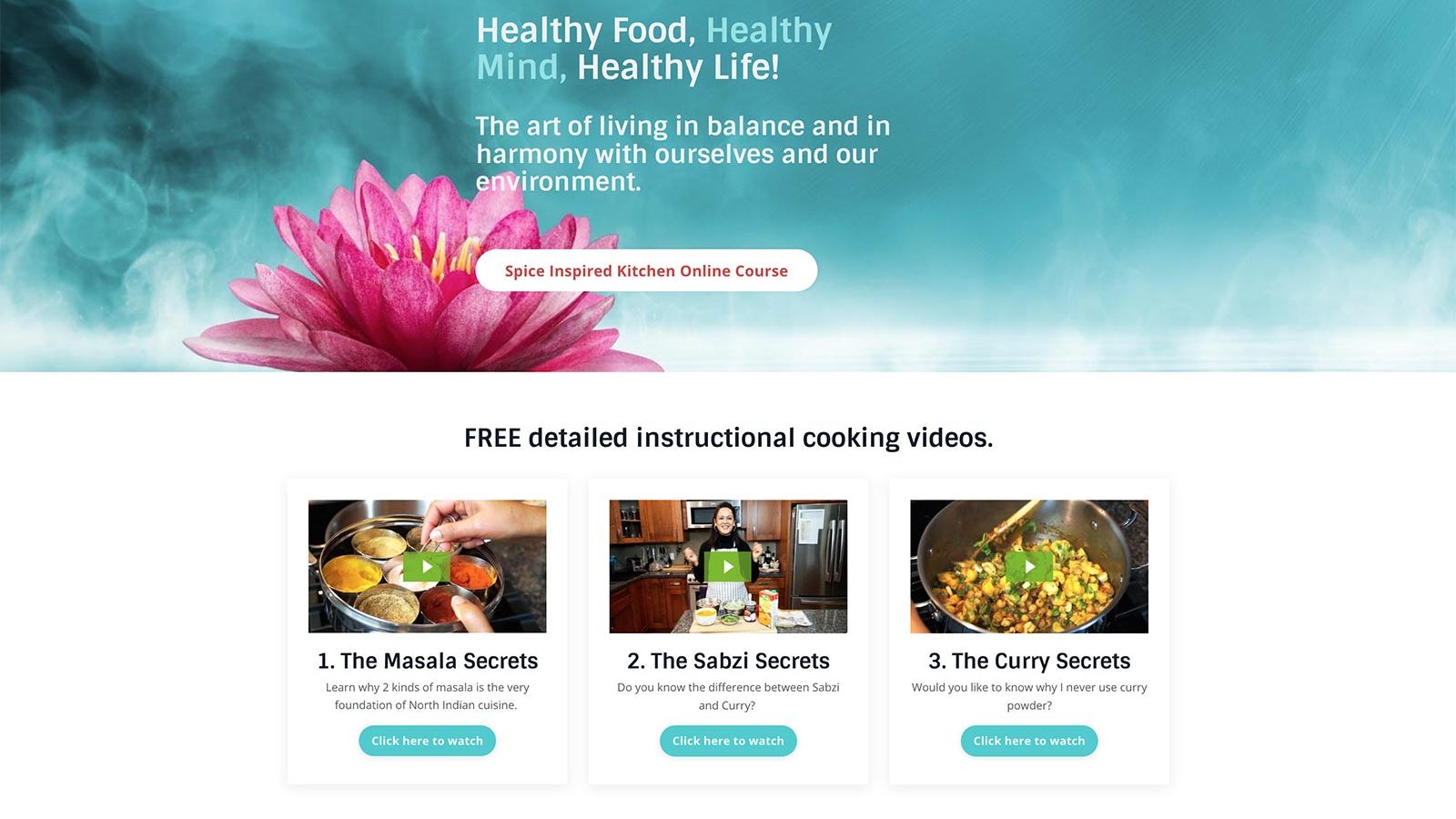
May 04, 2026Several years ago, I built my first online course with a client called Spice Inspired Kitchen, an Indian vegetarian cooking course. Like most first-time course creators, we threw ourselves into it completely. We planned the lessons, recorded the videos, designed the worksheets, built the course, and launched it feeling confident we'd created something people would genuinely value.
We didn't just hope people would find it, either. We followed Jeff Walker's Product Launch Formula — three pre-launch videos, social promotion, paid ads, the whole sequence — and priced the course low for our first students so we could get honest feedback in return.
And the feedback really was good. People enjoyed the course, liked the recipes, said the lessons were valuable. For a while I thought that meant we'd done everything right.
Looking back, though, we'd skipped one of the most important pieces of homework. Our sales page spent almost all of its time describing what was inside the course — the lessons, the recipes, the videos, everything a student would receive — and almost none of it explaining what would actually be different in someone's life after taking it. We'd described the contents. We hadn't sold the outcome.
There was a second lesson hiding behind that one, and it took me longer to see it. We knew people bought Indian cooking courses, because successful ones already existed in the market. That gave us confidence. What it didn't give us was any evidence that people wanted to buy ours specifically — and at the time, I didn't understand that those were two completely different questions. I do now. It might be the most important business lesson that project ever taught me, and it changed how I approach every course since.
These days, when someone tells me they have a course idea, I don't ask what platform they're planning to use, how many lessons they're building, or what camera they bought. I ask something simpler: what makes you believe people will buy your course? Most people expect to talk about software and pricing first. Those conversations matter, but they come later — because if you're building something people don't actually want, better marketing just helps more people discover an offer they were never going to buy.
That question also left me with a harder one to answer for myself: how do I avoid making the same mistake again? I didn't sit down and invent a framework for it. I wasn't trying to build a methodology. It's just that over the following years, working with more and more clients, I kept noticing I was looking for the same kinds of evidence before I'd encourage anyone — myself included — to spend months building a course. Only much later did I put names to those stages, mostly because it made the conversation easier to have with clients. The names themselves don't matter much. The thinking behind them does.
Hope
Hope is where every course starts. You have an idea that excites you, you believe you can genuinely help people, and that's exactly where every successful business begins — but it's also where every unsuccessful one begins.
Hope tells you how you feel about the idea.
It tells you nothing about how the market feels.
Interest
Interest is the next stage, and it's where I stop paying attention to my own excitement and start paying attention to everyone else's. Are people already asking questions about this problem? Searching for answers? Actively trying to solve it on their own? If I can't find those conversations happening anywhere, I get cautious. If I can, I know I'm looking at a real problem instead of one I've imagined into existence.
Market Proof
After that comes Market Proof — who's already solving this problem, and who's built a business doing it? I used to think competition was something to avoid. Now I see it as reassurance: if people are already spending money to solve a problem, that tells me the opportunity is real, and I'd much rather compete in a market that already exists than spend months convincing people to care about something they've never thought about.
Real Validation
The final stage is the one that changed my thinking the most, and I call it Real Validation.
Market Proof tells you the opportunity is real.
Real Validation tells you that you're the right person to solve it.
That's exactly the lesson Spice Inspired Kitchen taught me the hard way. Finding other successful cooking courses wasn't enough; we already had that. The real question was never whether people bought Indian cooking courses. It was whether they wanted to buy ours, and that's a completely different question with a completely different answer.
The only way I've found to answer it honestly is when someone actually trusts you enough to pay — and it doesn't need to be for a finished course. It could be:
- A consultation
- A workshop
- A beta program
- Or helping one client solve one specific problem
The amount barely matters. The decision does. The moment someone pays you, you've traded an assumption for evidence, and that one shift changes everything about how confidently you build.
It's also why I've mostly stopped building detailed customer avatars. I'd rather have one honest conversation with a real person than spend an afternoon inventing a fictional one — because real people tell you what actually frustrates them, what they've already tried, and what they wish someone would help them solve. I've learned more from those conversations than from any worksheet I've ever filled out.
People often ask me when they should finally start building their course. My answer hasn't changed in years: not when you're excited, not when you've picked the right platform, not when you've finished your outline — but when you have enough evidence that someone is already waiting for what you're about to create. That doesn't mean you've eliminated risk. No business comes with guarantees, and there will always be uncertainty. The goal was never to remove it. The goal is to stop guessing.
When I look back at Spice Inspired Kitchen now, I don't see a disappointing project. I see one of the most valuable business lessons I've ever been handed. The course itself taught people how to cook authentic Indian vegetarian food. The experience taught me how to build a better business — that building a great course isn't enough, and that the confidence to build the right one doesn't come from hope, enthusiasm, or picking the right platform.
Because building a course doesn't prove people want it.
Evidence does.